
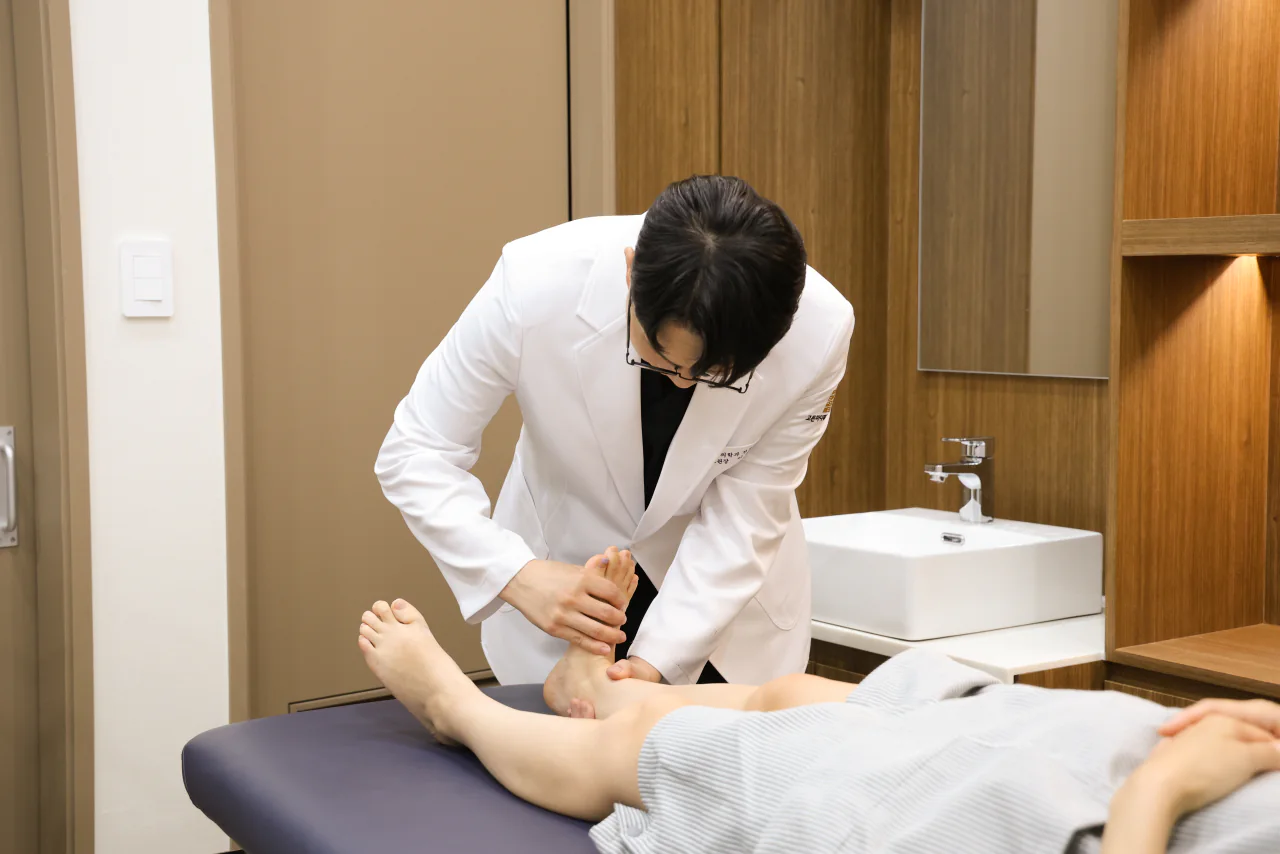
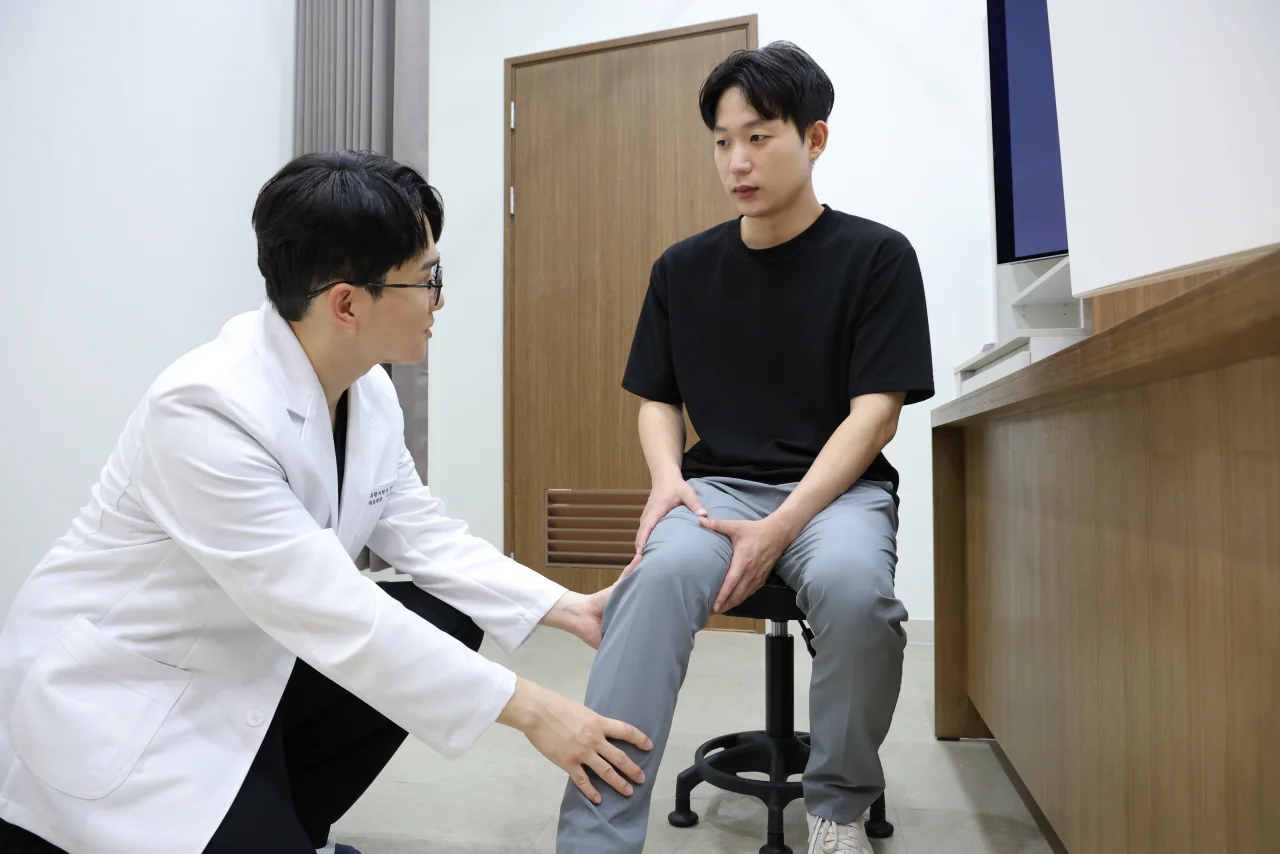
Gordonmadi clinic — care hero knee foot sj2 0445

Knee, Ankle & Foot Pain

Knee, ankle, and foot pain can change the way you move

Pain during stairs, walking, running, or weight bearing may involve joints, tendons, ligaments, or the way the lower limb functions.

We examine the painful structure and the movement that provokes symptoms.

01 · Symptoms

Symptoms and situations we evaluate

These include knee pain on stairs, running-related knee pain, ankle sprains, persistent swelling, Achilles tendon pain, heel pain, and plantar foot pain.

Select a symptom card to highlight the related body area. Select it again or press Escape to clear the highlight.

What a focused examination may include

The physician assesses swelling, tenderness, stability, strength, walking, and functional movement.

  1. Gordonmadi clinic — sj2 0107

    Ultrasound or X-ray may be used when relevant.

  2. Gordonmadi clinic — sj2 0078

    The assessment includes Joint examination when it helps answer the clinical question.

02 · Care options

Care and rehabilitation

Knee pain on stairs or while squatting

Knee alignment, range of motion, and pain under load are compared during the examination.

The assessment also considers how “Knee pain on stairs or while squatting” changes with activity, rest, and daily function.

Knee pain while walking or changing direction

Walking, turning, and joint stability are reviewed to clarify the movement that provokes pain.

The assessment also considers how “Knee pain while walking or changing direction” changes with activity, rest, and daily function.

Pain that returns during running or exercise

Training load, recovery time, and the exact painful movement help define the next step.

The assessment also considers how “Pain that returns during running or exercise” changes with activity, rest, and daily function.

Discomfort that remains after an ankle sprain

Swelling, stability, and the ability to bear weight are checked after an ankle sprain.

The assessment also considers how “Discomfort that remains after an ankle sprain” changes with activity, rest, and daily function.

Pain in the sole of the foot

The painful area, first steps after rest, and foot loading pattern are examined together.

The assessment also considers how “Pain in the sole of the foot” changes with activity, rest, and daily function.

03 · Assessment

Care options follow the assessment

The physician uses Knee pain to distinguish one symptom pattern from another.

The review of Ankle sprain adds context about movement, timing, and daily function.

  1. Ligament stability

    The assessment uses Achilles pain to stay focused on the main concern.

    The physician uses Plantar foot pain to distinguish one symptom pattern from another.

  2. Walking and movement

    The review of Joint examination adds context about movement, timing, and daily function.

  3. Ultrasound assessment

    The assessment uses Ligament stability to stay focused on the main concern.

    The physician uses Walking and movement to distinguish one symptom pattern from another.

Questions patients often ask

How can I contact the clinic before a visit?

Call +82-2-498-0888 to ask about the current schedule before you travel to the clinic.

Calling ahead can help you check the current hours before leaving for the clinic.

Where is Gordonmadi located?

The clinic is located at B1, Megabox Square, 50 Wangsimni-ro, Seongdong-gu, Seoul, Republic of Korea.

Use the full street address when entering the destination in a map application.

What should I bring to the consultation?

Bring any previous imaging, reports, medication lists, or medical records that may help explain your current symptoms.

Records are most useful when their dates and the reason for each study are clear.

What happens during the initial assessment?

The physician reviews when the problem began, examines movement and symptoms, and explains whether additional testing may be useful.

The order of the assessment can change according to the main concern.